
A practical orientation
Begin with the reality in front of you, not the equipment you may or may not use.
The early questions are often about healing, movement, support, and what your own goals are. This page helps put those questions in order.
Subject context
The body, the routine, and the next stage
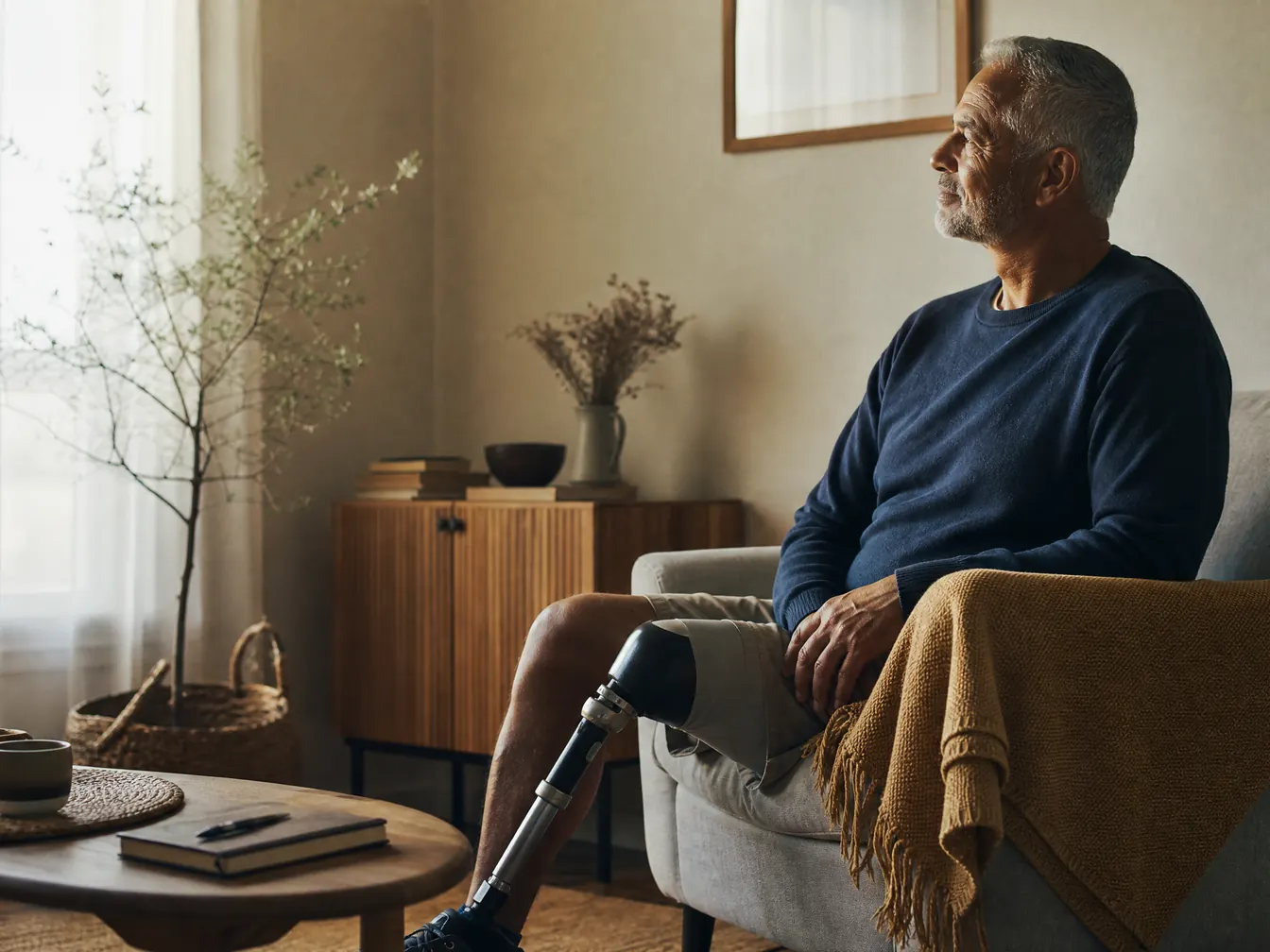
Limb loss can change how a person moves, rests, works, and takes part in familiar routines. The practical work often begins with healing, swelling, safe movement, joint motion, and rehabilitation, not with choosing equipment.
A prosthesis may be part of someone’s path, but it is not the only measure of progress. Mobility aids, adaptations, therapy, support people, and personal priorities all belong in the picture.
What this subject includes
The subject before the questions.
Start here for the core ideas behind this guide. The question list comes later, after the subject has been given room to make sense.
Healing and readiness
Early care commonly focuses on healing, swelling, safe movement, and joint motion as directed by a qualified clinician.
Rehabilitation
Therapy may support strength, balance, transfers, daily tasks, and the use of mobility equipment.
More than one path
A prosthesis is one possible path. Other mobility approaches and personal goals belong in the care conversation too.
A closer look
A little more context before you decide what to ask.
The early recovery picture can include wound care, swelling management, transfers, range of motion, strength, balance, and mobility equipment. These needs can change over time, so the next useful question may belong to a surgeon, therapist, rehabilitation clinician, prosthetist, orthotist, or primary-care clinician.
01
A change with more than one next step
A limb difference or limb loss can affect movement, routines, identity, work, family life, and access to care. It can also bring unfamiliar language into the room very quickly. You do not need to master that language at once.
This guide is a map of the broad steps people may encounter. It cannot predict an individual timeline or recommend a device, but it can help you recognize which questions belong with your surgeon, rehabilitation team, prosthetist, orthotist, or benefits contact.
02
What the first weeks may involve
After surgery, the immediate priorities are commonly wound healing, swelling management, safe movement, and keeping nearby joints moving as directed by a clinician. Some people use a shrinker sock, compression wrap, or a temporary protective approach while the residual limb changes shape.
Physical and occupational therapy may begin before a permanent prosthesis is considered. These sessions can focus on strength, balance, range of motion, transfers, daily tasks, or using mobility equipment. A permanent socket is typically considered only when a qualified team determines that healing and limb shape are ready for that conversation.
03
A prosthesis is one possible path
It is worth saying plainly: using a prosthesis is one path, not the only measure of recovery or success. Some people use a prosthesis regularly, some use one for specific activities, and some choose or need other mobility approaches, such as a wheelchair, crutches, or adaptations to daily routines.
Health factors, healing, goals, support, environment, and personal preference can all shape decisions. A strong care conversation makes room for the goals that matter to the person, not only the equipment that might be used.
04
What can make the next conversation clearer
You can prepare without trying to solve the whole situation. Keep a short list of what you want to do, what feels difficult, what support is already in place, and which words you want explained. Bring a trusted support person if that would be useful.
If you are offered an appointment with a prosthetist or orthotist, ask what to bring and how the appointment will work. You can also ask who coordinates questions about rehabilitation, mobility, device fitting, pain, transportation, or insurance paperwork.
Terms
A few words that make the rest easier
Residual limb
The remaining physical portion of an arm or leg after an amputation.
Rehabilitation
Services that support function, mobility, daily activities, and participation after an injury, surgery, or health change.
Prosthetist
A clinician who designs, fits, and maintains prosthetic devices.
Mobility aid
Equipment such as a wheelchair, walker, crutches, or cane that may support safer movement.
FAQ
Questions people often ask
Sources & resources
Continue with care.
These resources offer additional public education and clinician-facing rehabilitation context. They do not replace an individual assessment.
National Limb Loss Resource Center
A public hub for expert-reviewed education, peer support, healthcare navigation, and information specialists.
Amputee CoalitionClinical referenceRehabilitation of Lower Limb Amputation (2025)
An evidence-based clinical practice guideline intended to assist healthcare professionals across pre-amputation, post-amputation, and primary care.
VA/DoD Clinical Practice GuidelinesContinue with context